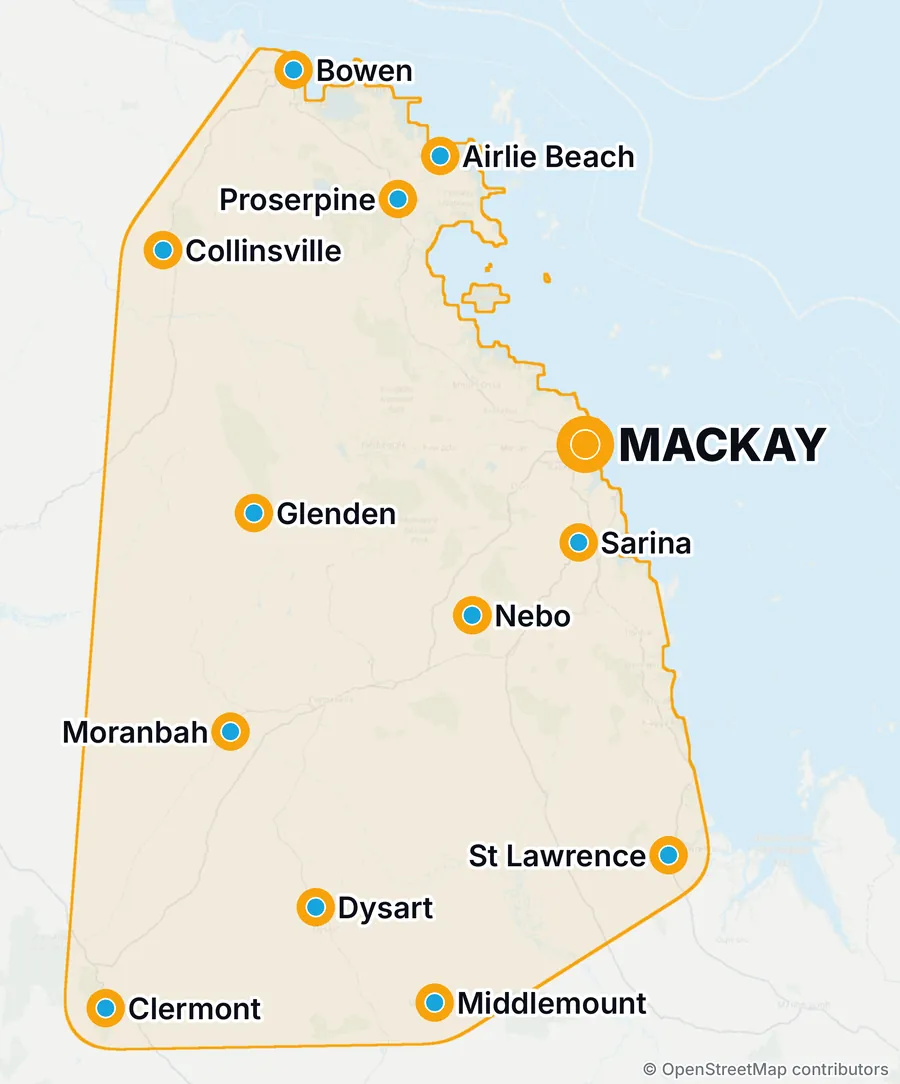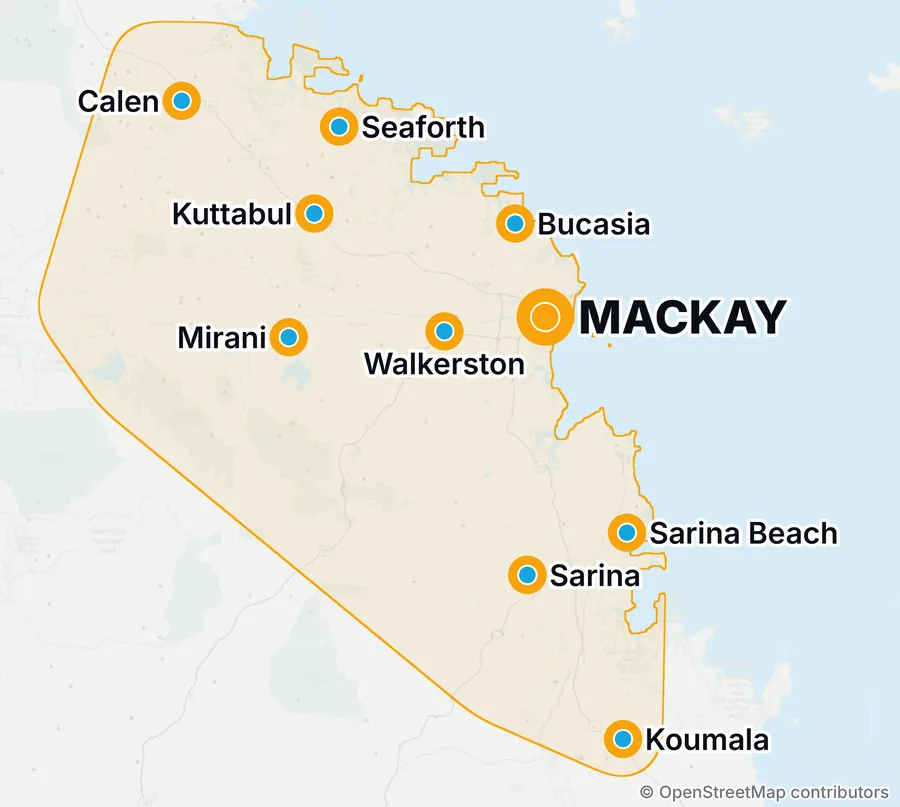

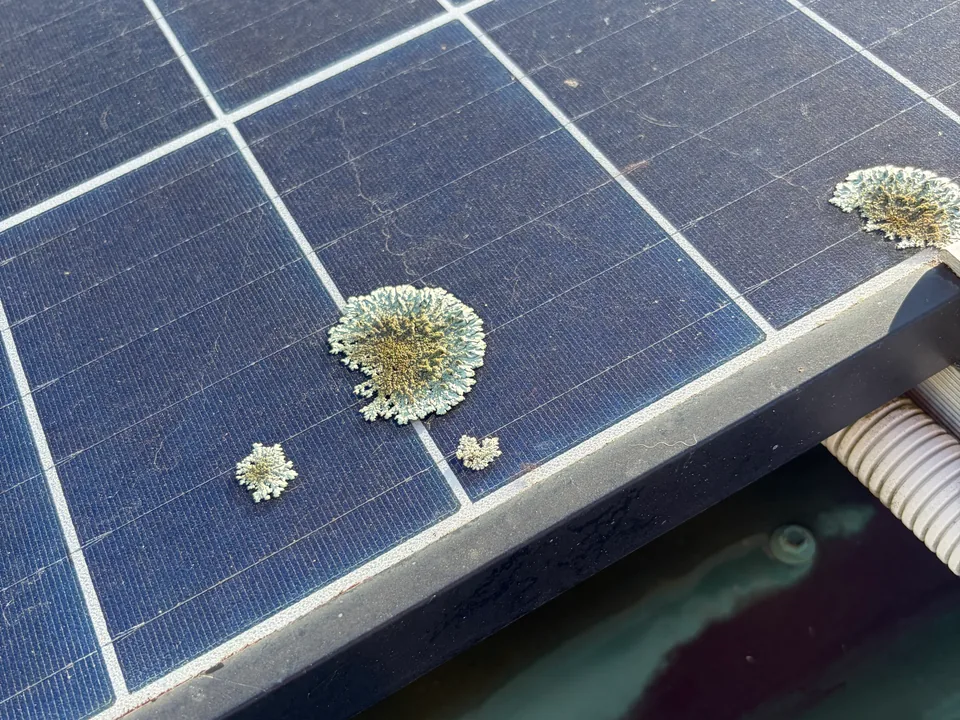
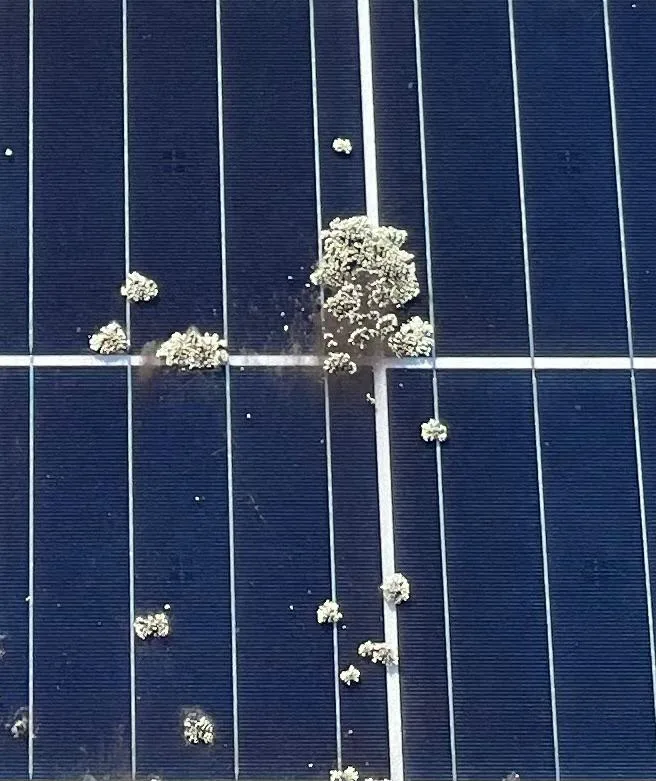
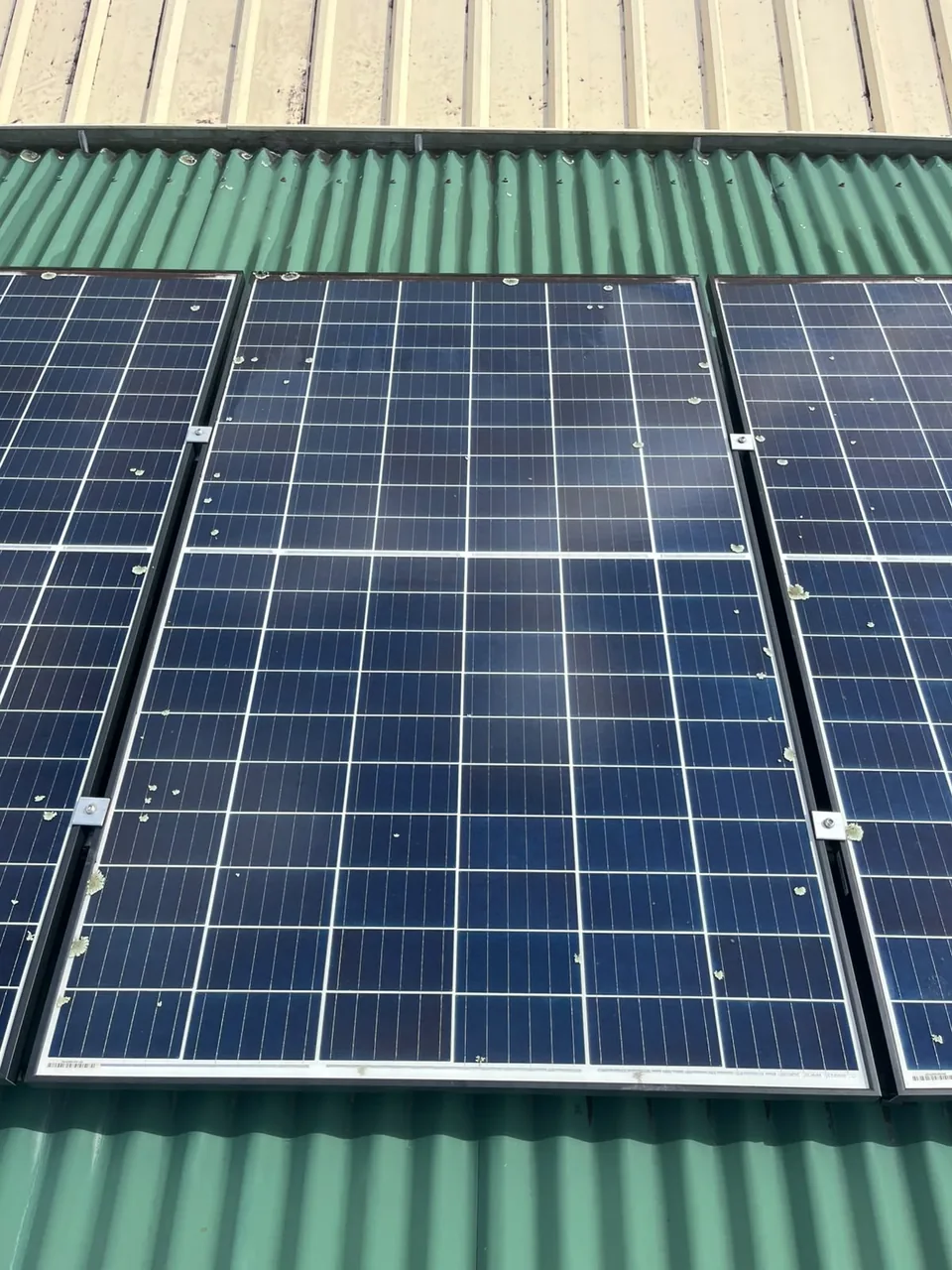
If you have looked up at your panels lately and seen pale grey or white spots on the glass, that is not dust and it is not bird droppings. It is lichen, and it is on a lot of Mackay roofs. It does not rinse off, and it does not go away on its own.
What lichen is, and what it looks like
Lichen is a fungus and an alga living together. It grows on rock, on bark, on fence posts, and on anything that stays damp long enough, which on a Mackay roof includes the glass on your solar panels.
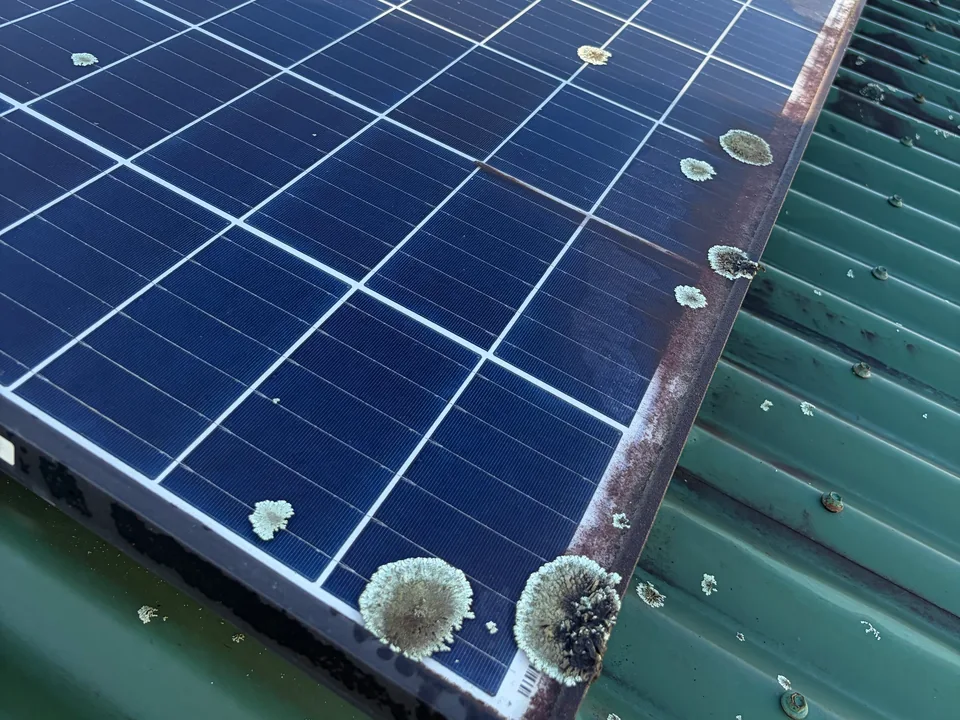
It starts as small pale spots, often near the frame or along the bottom edge where water sits longest, and spreads outward in rough circles. Up close it looks like flaky, crusty patches. From the street it can look like the panels are just a bit dirty.
Why Mackay grows it
Mackay is warm, humid and wet. Two thirds of its rain falls between December and March, on 66 years of Bureau of Meteorology records, and the humidity does not drop much in between. Glass that is damp at dawn, warm through the day and damp again at night is exactly what lichen wants.
Roofs near the coast and roofs under trees get it sooner. So does a roof edge that stays wet because the gutters are full: the spots start along the bottom of the panels, and a gutter clean goes on the same visit if you want it.
Why the rain does not wash it off
Dust washes off in a decent storm. Lichen does not, and it is worth understanding why, because it is the reason a wet season does not clean your panels for you.
Lichen is not sitting on the glass. It is attached to it, and it holds on the way it holds on to a rock. Rain runs over the top of it and leaves it where it is. The wet season helps it grow rather than clearing it, so panels that looked fine in October can carry a crop of spots by April.
Each patch blocks the light to the cells underneath it. A panel does not stop working because of a few spots, but the cells under them are working in the shade while the rest of the panel is not, and the spots keep growing until somebody takes them off.
How to clean it properly
It comes off with water, a soft brush and patience. That is the whole method, and everything else on this list is something we see people do that damages panels.
- Water, not chemicals. Water and a soft brush lift lichen off the glass. We check the water at the tap before we start, because water carrying a lot of minerals dries into spots on the glass, and we rinse and dry accordingly. Detergents, bleach and roof cleaners leave a film, and some of them mark the frame and the seals.
- A soft brush, not a scourer. Lichen is crusty, so the temptation is to scrub. A soft bristle brush and a bit of time do the job without scratching the glass.
- No pressure washer on the glass. The seals around the edge of a panel are not built for that pressure. Low pressure hose water and a brush are all it takes.
- Nobody stands on the panels. Not on the glass, not on the frame. Work from a ladder or with a pole, or leave it to somebody with the gear.
- Cool glass, early in the day. Cold water on hot glass in the middle of a Mackay afternoon is asking for trouble. Mornings are for cleaning.
How often
On most Mackay roofs, a clean every six months keeps lichen from getting established. If the roof itself has lichen on it, on the tiles or the sheeting, the panels pick it up faster and every three months is closer to the mark.
The simplest rhythm to remember is one clean just before the wet season and one just after it.
If you would rather not go up
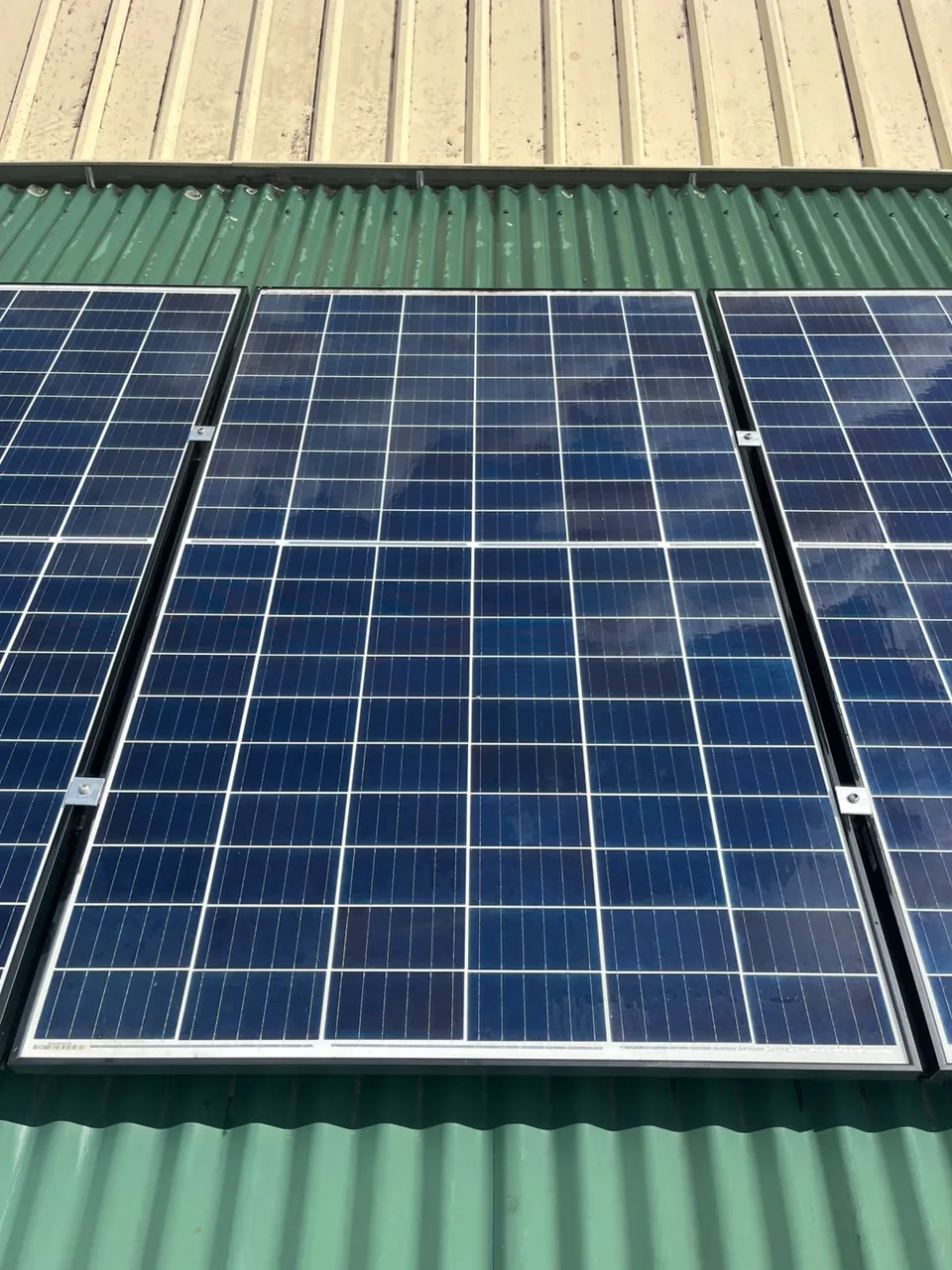
Our Solar Health Check cleans every panel with water and a soft brush, scans each one with a thermal camera and sends you a photo report with every panel before and after. If you only want the wash, the panel clean on its own is booked the same way.
If you are curious what the thermal camera actually sees, we wrote that up too: what a thermal scan of your solar panels shows.
Not sure yours even need cleaning? Send us a photo of your panels and we will tell you. No charge, no visit needed to find out.
Frequently asked questions
Does lichen damage the glass on solar panels?
Lichen holds on to the glass, but in our experience it comes off with water and a soft brush without leaving a mark. What damages the glass is what people use to get it off: pressure washers, scourers and harsh cleaners.
Will lichen grow back after cleaning?
Yes, in time, because the conditions that grew it are still there. A clean every six months keeps it from taking hold, and every three months if the roof itself has lichen on it.
Can I use a pressure washer on solar panels?
Not on the glass. The seals around the edge of a panel are not built for that pressure. Low pressure hose water and a soft brush do the job.