
If you live in Mackay and you have not had your solar panels cleaned in two years, you are almost certainly losing 10 to 20% of your output. That is real money. For a 6.6 kW system, 15% output loss over 12 months is around 1,500 kWh, which is roughly $500 of power you have paid Ergon for instead of generating. The cleaning service that would have prevented it costs $150 to $300.
Here is the honest analysis of why panels in Mackay foul faster than panels in Brisbane, and what it actually costs you.
Why Mackay panels foul faster
Mackay has four soiling sources that Brisbane and most southern capitals do not deal with at the same intensity. Stacked, they make rooftop solar in Mackay materially harder on glass than rooftop solar 1,000 km south.
1. Salt spray (Bucasia, Slade Point, Blacks Beach, Shoal Point, Mackay Harbour)
Coastal suburbs sit within a few hundred metres of the Coral Sea. Salt aerosols carry inland during onshore winds. Salt deposits are initially invisible, building into a light-blocking film over weeks. Salt also corrodes aluminium frame alloys over time and can compromise the seals on junction boxes. Coastal Mackay panels typically lose 8 to 15% output annually to salt soiling if not cleaned.
2. Bowen Basin coal and haul road dust
Mackay is the service hub for the Bowen Basin. The Queensland Government Statistician’s Office reports that “most of the region’s resource industry workers in June 2024 were engaged in coal mining (44,325 persons or 94%).” Coal dust, haul road dust and overburden particles travel further than people realise. North-west winds drift dust over the Mackay region, especially in dry winter months. Panels in West Mackay, Walkerston and Paget industrial areas typically show the heaviest dust loading.
3. Cane farm dust and burning residue
Mackay sits in one of Australia’s largest sugar cane regions. Cane harvest (June to November) generates field dust. Even with green cane harvesting now standard, dust loading during harvest months is significant in suburbs near cane country (Marian, Mirani, Walkerston, Habana, Eimeo Rural View).
4. Tropical bird fauna
Cockatoos, lorikeets, ibis and flying foxes are abundant in Mackay. Bird droppings cause more output loss per unit area than dust because they form hard, sticky shadows on specific cells, triggering bypass diode activation and disproportionately reducing string output. Independent research consistently finds the per-area impact of bird droppings can be roughly three times that of dust. If birds are nesting under the array, a clean only buys a few months: bird proofing closes the gap under the panels so the mess stops coming back.
What the soiling losses look like in actual numbers
Industry studies put baseline soiling loss for a “standard” location at around 1 to 2% per year. Mackay is not a standard location. Real-world soiling in Mackay typically falls in these ranges:
| Suburb / location type | Annual soiling loss (estimated) |
|---|---|
| Inland Mackay suburbs, well rained on, low bird activity | 3 to 6% |
| Coastal suburbs (Bucasia, Slade Point, Shoal Point) | 8 to 15% |
| Near cane farms or rural roads (Habana, Marian, Walkerston) | 10 to 18% |
| Heavy bird traffic, near gum trees | 12 to 25% |
| Panels not cleaned for 3-plus years | 15 to 30% |
Peer-reviewed studies in heavily soiled environments have recorded extreme cases. Cordero et al., publishing in Scientific Reports in 2018 (DOI 10.1038/s41598-018-32291-8) measured five Atacama Desert cities over 12 months and found “the combination of high deposition rates and infrequent rainfalls led to annual energy losses that peaked at 39% in the northern coastal part of the desert.” A separate study by Mejia and Kleissl at UC San Diego, published in Solar Energy in 2013, tracked 186 California solar sites and (per the UC San Diego Jacobs School of Engineering news release) found panels that had not been cleaned, or rained on, for 145 days during a summer drought “lost only 7.4 percent of their efficiency.” Mackay rain helps, but it does not clean panels properly. Rain washes loose dust but leaves salt, oil, bird droppings and stuck-on grime.
Soiling is also a separate problem from weather. Cloud cover cuts output temporarily; grime keeps cutting it every day until it is removed. For the weather side of the equation, see our guide to whether solar panels work on cloudy days.
What that output loss costs you in dollars
For a Mackay home with a 6.6 kW system generating roughly 27 kWh per day clean (around 9,800 kWh per year):
| Soiling level | Lost generation (kWh/yr) | $ lost at 33 c/kWh self-consumption |
|---|---|---|
| 5% | 490 | $162 |
| 10% | 980 | $323 |
| 15% | 1,470 | $485 |
| 20% | 1,960 | $647 |
| 25% | 2,450 | $809 |
Scale that up to a 10 kW or 13 kW system and the loss is proportionally larger. For a 50 kW commercial system in Paget, 15% soiling loss is roughly 12,000 kWh per year, around $4,000 of avoidable cost.
What professional cleaning actually costs in Mackay
Standard pricing for residential solar panel cleaning in Mackay:
- 6.6 kW system (around 16 panels): $150 to $300
- 10 kW system (around 24 panels): $250 to $450
- 13 kW system (around 32 panels): $350 to $550
Pricing varies based on roof pitch, accessibility, ladder height and condition of the panels.
Cleaning frequency depends on your location:
- Inland, low bird traffic: every 18 to 24 months is usually enough
- Coastal (Bucasia, Slade Point, Mackay Harbour): every 12 months minimum
- Near cane farms or trees with heavy bird traffic: every 6 to 12 months
- Commercial roofs with heavy dust loading: every 6 months
The DIY trap
Doing it yourself sounds cheap. It usually is not. Three real issues:
-
Safety. Working on a Mackay roof in 30-degree summer heat, on a steep pitch, near live DC at up to 600 V is genuinely dangerous. Falls from roofs are a leading cause of construction injury in Australia. Professionals carry insurance and use safety harnesses, water-fed poles and elevation gear.
-
Damage. Pressure washing solar glass at high pressure cracks panel glass and strips coatings. Tap water leaves mineral deposits as it dries. The wrong brush or solution scratches the anti-reflective coating. Each of these voids the panel warranty.
-
Warranty compliance. Most panel manufacturer warranties include a clause requiring regular cleaning. Documentation of professional cleaning supports any future warranty claim. Self cleaning without records does not.
When it is genuinely worth skipping
If your panels are at a steep pitch, rain washes them regularly, you live inland, your suburb has low bird traffic, and you have a monitoring app showing your generation is on target year on year, you can stretch cleaning to 18 to 24 months. Some Mackay homes can.
For coastal homes, near cane country, near big trees, or any commercial system, cleaning is essentially mandatory maintenance, not optional.
What we check during a clean
A professional clean is not just a wash. The visit includes:
- Visual inspection of all panels for cracks, hot spots, junction box damage, frame corrosion
- Inspection of mounting rails and fixings (especially important in Mackay’s cyclone region)
- Inspection of cable management and conduit
- Cleaning with deionised or filtered water and soft brush, no abrasive chemicals
- Bird proofing assessment if relevant
- Report on system condition
Frequently asked questions
How often should solar panels be cleaned in Mackay?
It depends on where you are. Inland suburbs with low bird traffic can stretch to every 18 to 24 months. Coastal suburbs like Bucasia, Slade Point and Mackay Harbour need it every 12 months minimum. Homes near cane farms or trees with heavy bird traffic need it every 6 to 12 months, and commercial roofs with heavy dust loading every 6 months.
How much does solar panel cleaning cost in Mackay?
Around $150 to $300 for a 6.6 kW system (around 16 panels), $250 to $450 for a 10 kW system, and $350 to $550 for a 13 kW system. Roof pitch, accessibility, ladder height and panel condition move the price within those ranges.
Does rain clean solar panels?
Not properly. Rain washes off loose dust but leaves salt film, oil, bird droppings and stuck-on grime, and those are exactly the deposits that cost Mackay systems the most output.
Can I clean my solar panels myself?
It is usually not worth the risk. You are working at height near live DC at up to 600 V, pressure washers and the wrong brushes can crack glass or strip the anti-reflective coating and void the panel warranty, and self cleaning without records does not support a future warranty claim.
How much output do I lose if I skip cleaning?
Coastal Mackay panels typically lose 8 to 15% of output annually to salt soiling alone, and panels not cleaned for 3-plus years commonly sit at 15 to 30% loss. For a 6.6 kW system, 15% soiling is about 1,470 kWh a year, roughly $485 at 33 c/kWh self-consumption.
Sources
- Cordero et al., Scientific Reports, 2018, DOI 10.1038/s41598-018-32291-8 (12-month soiling study across five Atacama Desert cities)
- Mejia and Kleissl, Solar Energy, 2013, study of 186 California solar sites, as reported in the UC San Diego Jacobs School of Engineering news release
- Resource industry workforce figures for the Mackay region, Queensland Government Statistician’s Office
- Residential electricity rate used in savings estimates (around 33 c/kWh): Ergon Energy residential tariffs, ergon.com.au
What to do next
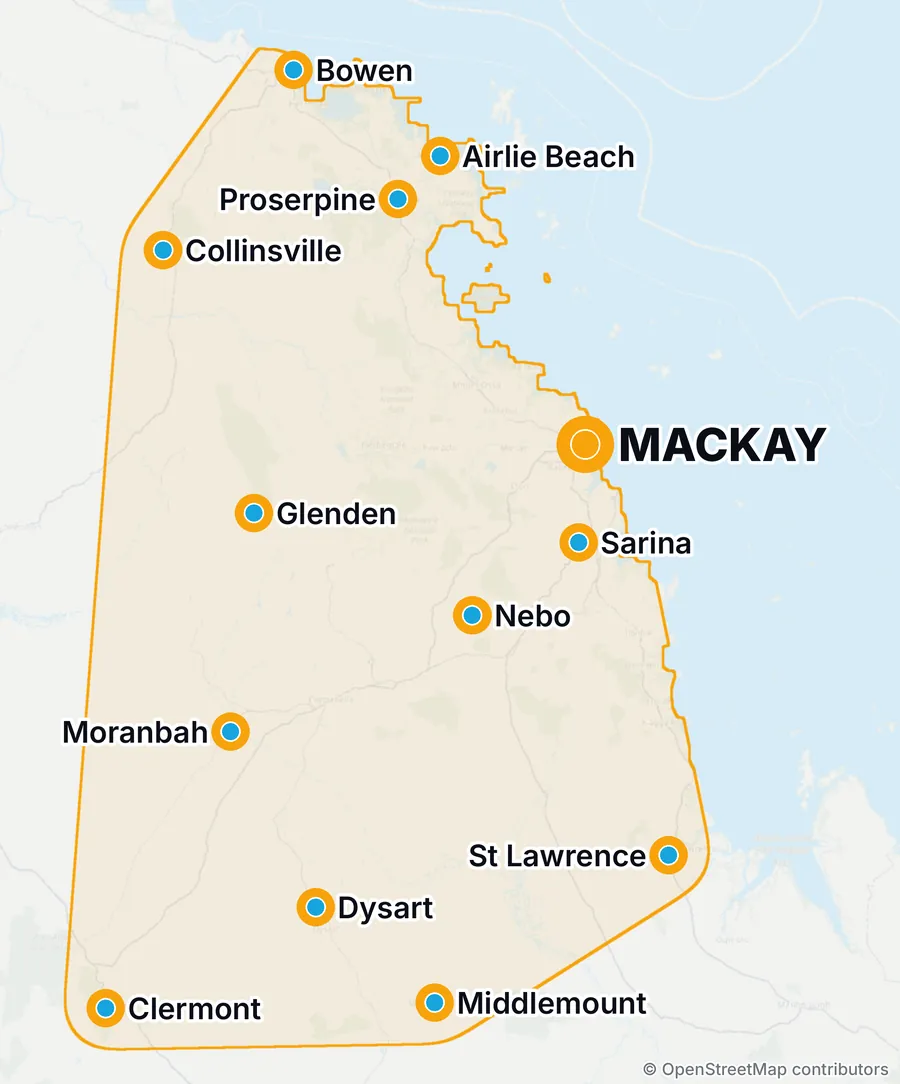
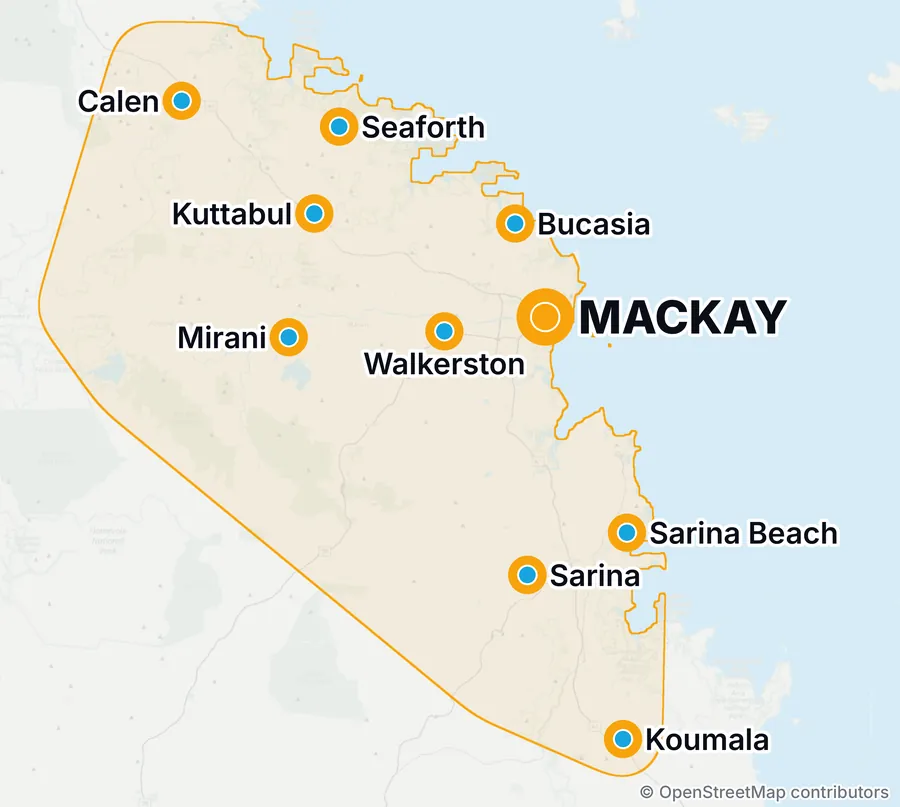
Next Phase Solar handles solar panel cleaning across Mackay and surrounding suburbs. We service residential and commercial systems, our crew is local, and we provide an inspection report with every clean so you know what we found, not just what we washed. We work across Bucasia, Andergrove, North Mackay, Slade Point, East Mackay, West Mackay, Sarina, Paget and the broader Mackay region.
Last reviewed July 2026.