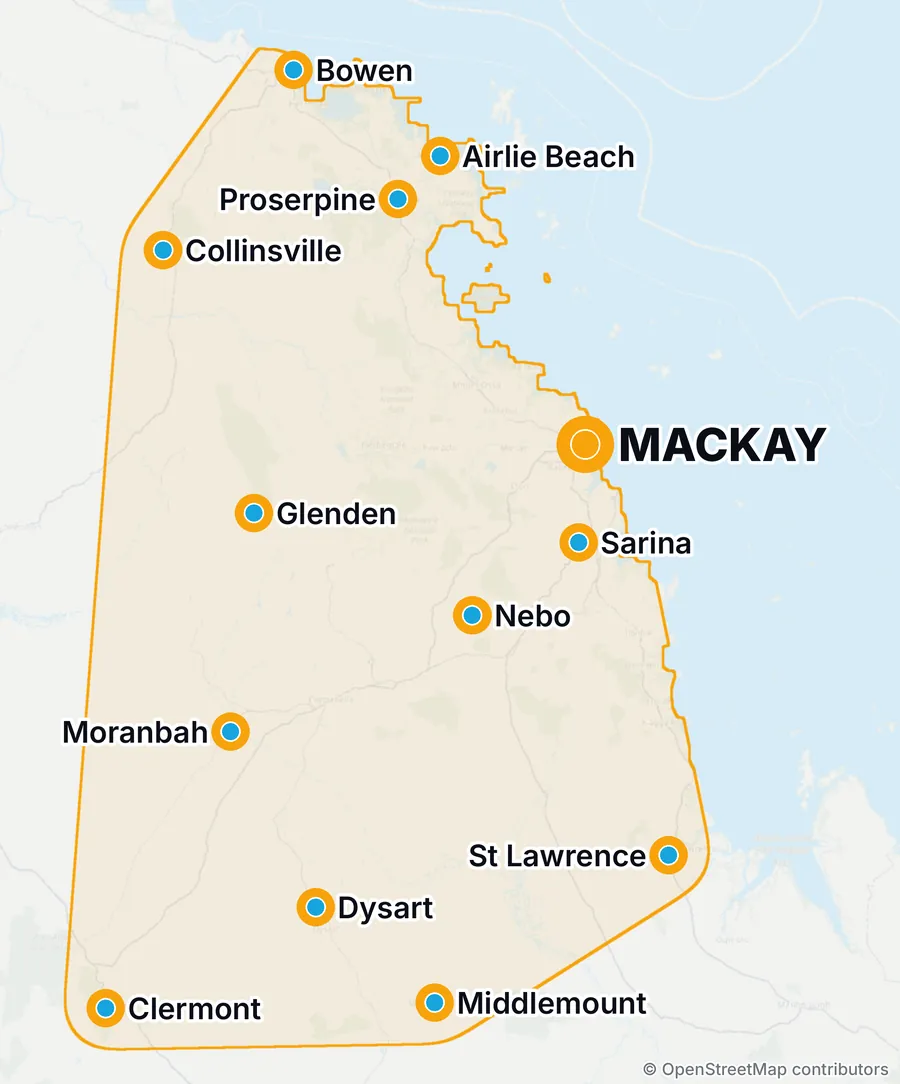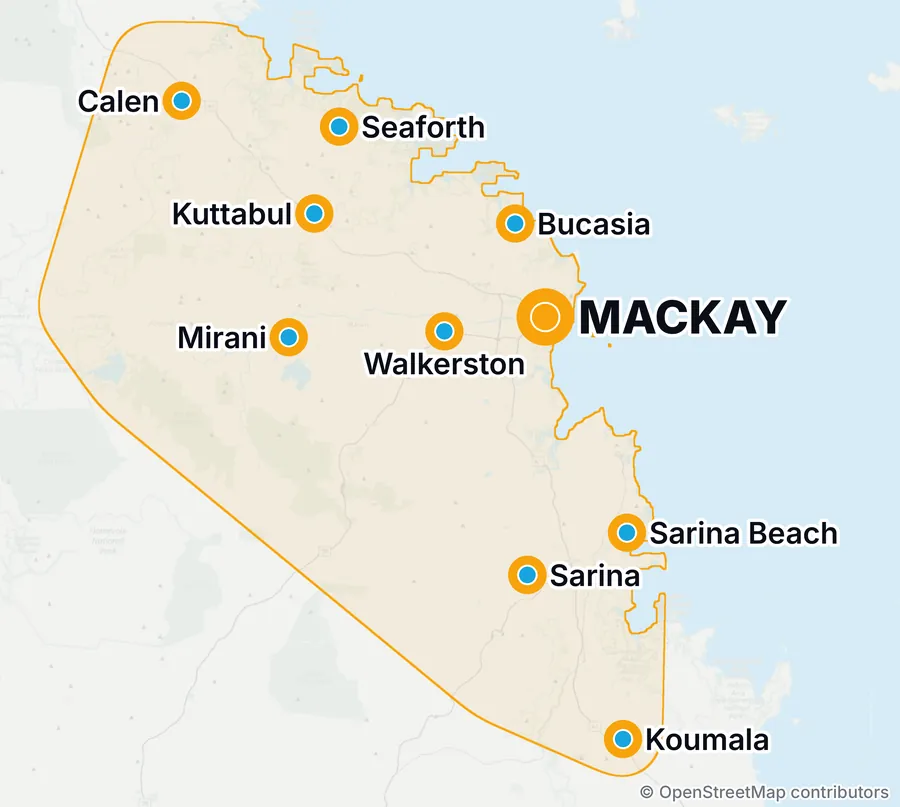

If you are a Mackay business owner pricing commercial solar, there are two numbers worth knowing before you read another marketing PDF. The first is 1.382, Mackay’s STC zone rating, which is the same rating Brisbane gets. Anyone telling you a Mackay roof earns a bigger federal rebate than a Brisbane one because of its zone is wrong. The second number is the deeming period, and that one is genuinely about to cost you money: it drops on 1 January 2027.
Here is the practical explainer for what you actually get in 2026, and why timing this install before 1 January 2027 matters.
The federal commercial solar rebate, briefly
Commercial solar systems up to 99.99 kW total capacity are eligible for Small-scale Technology Certificates (STCs). One STC equals roughly one MWh of expected generation over the system’s deeming period. STCs are tradable and your installer typically assigns them upfront, applying the value as a discount on your invoice.
The number of STCs you receive is:
System size (kW) x Zone rating x Deeming period (years), rounded down
For Mackay in 2026 that means:
- Zone rating: 1.382 (Zone 3, the same as Brisbane)
- Deeming period: 5 years (drops by 1 year every 1 January)
- STC market price: around $38 (the Clean Energy Regulator’s clearing house cap is $40 ex GST)
What that looks like in dollars
Worked examples for Mackay commercial systems installed during 2026:
| System size | STCs (approx) | Rebate value at $38 |
|---|---|---|
| 30 kW | 207 | ~$7,900 |
| 50 kW | 345 | ~$13,100 |
| 75 kW | 518 | ~$19,700 |
| 99 kW | 684 | ~$26,000 |
These numbers assume STC pricing near $38. Real prices fluctuate, so your installer should state the STC unit price they are pricing on and what happens if the price moves more than 10%.
What changes on 1 January 2027
Every 1 January, the deeming period drops by one year. In 2026 it is 5 years. In 2027 it becomes 4 years. That is a flat 20% reduction in your STC count overnight.
Same systems, installed in 2027 instead of 2026:
| System size | STCs (approx) | Rebate value at $38 | Reduction vs 2026 |
|---|---|---|---|
| 30 kW | 165 | ~$6,300 | -$1,600 |
| 50 kW | 276 | ~$10,500 | -$2,600 |
| 75 kW | 414 | ~$15,700 | -$4,000 |
| 99 kW | 547 | ~$20,800 | -$5,200 |
The deeming period drops again on 1 January 2028, 2029 and 2030. The scheme ends on 31 December 2030. So 2026 is the second-to-last year of meaningful upfront rebates.
What zone Mackay is actually in, because this gets sold wrong
Under the Clean Energy Regulator’s postcode zone ratings, Australia has four STC zones, and higher zones reflect more solar radiation:
- Zone 1: 1.622. Alice Springs and the remote inland of Queensland, South Australia and Western Australia
- Zone 2: 1.536. Darwin, and inland Central Queensland including Emerald and Clermont
- Zone 3: 1.382. Mackay, Cairns, Townsville, Rockhampton, Brisbane, Sydney, Adelaide and Perth
- Zone 4: 1.185. Melbourne and Hobart
Mackay is Zone 3, rating 1.382, on postcodes 4737 to 4822. That is the same rating Brisbane, Sydney and even Cairns receive. A 50 kW system generates roughly 345 STCs here and roughly 345 STCs in Brisbane, so there is no coastal Queensland premium to claim.
It is worth saying plainly because it gets sold the other way round. If a quote justifies a bigger rebate on the grounds that Mackay sits in a better zone than the capitals, the number is wrong and the STC count on that quote will not survive the Clean Energy Regulator’s formula.
The one nearby exception is the inland: Clermont, on postcode 4721, does sit in Zone 2. A system there earns about 11% more certificates than the same system in Mackay.
The other timing pressures stacking up
If you only watch the STC drop you miss the bigger picture. Three regulatory shifts are converging:
- STC deeming period drops from 5 to 4 years on 1 January 2027, cutting rebates by approximately 20%.
- Ergon’s regional feed-in tariff drops from 8.66 c/kWh to 6.153 c/kWh on 1 July 2026 under the QCA’s draft determination, making any exported daytime power less valuable.
- Federal Cheaper Home Batteries rebate steps down every six months from 1 May 2026 (DCCEEW), raising the cost of adding storage later.
For a 50 kW commercial system, the difference between installing in May 2026 versus February 2027 is roughly $3,000 in lost STC rebate, plus reduced export credit, plus higher battery rebate cost if you add storage. Multiply that across the 20-year life of the asset and the case for not waiting is strong.
The rebate is only one input into the decision. For the full picture on payback, tariffs and the practical downsides, see our guide to the pros and cons of commercial solar in Mackay.
How to actually claim the rebate
You do not claim it. Your SAA-accredited solar installer creates the STCs on the Clean Energy Regulator’s REC Registry and assigns them to a market buyer. The value comes off your invoice as an upfront discount. You sign an STC assignment form at the time of accepting the quote.
Two things to check on your quote:
- The number of STCs being created (it should match the formula above for Zone 3)
- The STC unit price being used (between roughly $36 and $39 in 2026 is normal)
If the unit price stated is below $35 without explanation, you are paying for installer margin that should be passing through to you. If the STC count looks wrong, your system size or zone may have been miscalculated.
What about systems over 100 kW?
Above 100 kW total capacity, you exit the STC scheme entirely and enter Large-scale Generation Certificates (LGCs). LGCs are created annually based on actual generation, not deemed upfront. LGC market prices have softened to around $30 to $40 per certificate. A 250 kW system might generate 400 LGCs per year, so roughly $14,000 per year of certificate revenue, which is substantial over 10 years but lacks the immediate cash-flow benefit of the upfront STC.
Many Mackay businesses with roof space or load justifying 120 to 140 kW deliberately install at 99 kW to keep the STC rebate. Whether that is the right call depends on your accountant’s view and your power use profile. Run both scenarios.
Frequently asked questions
What is an STC?
A Small-scale Technology Certificate. One STC represents roughly one MWh of expected generation over the system’s deeming period. STCs are tradable, and your installer typically assigns them upfront and passes the value through as a discount on your invoice.
How many STCs does a 50 kW commercial system get in Mackay?
Around 345 STCs if installed during 2026 (50 kW x 1.382 zone rating x 5 year deeming period, rounded down), worth roughly $13,100 at an STC price of $38. The same system installed in Brisbane generates the same 345, because Mackay and Brisbane share Zone 3.
What changes on 1 January 2027?
The deeming period drops from 5 years to 4 years, which cuts the STC count and the rebate value by roughly 20% overnight. It steps down again every 1 January after that until the scheme ends on 31 December 2030.
Who actually claims the STC rebate?
Not you. Your SAA-accredited installer creates the STCs on the Clean Energy Regulator’s REC Registry and assigns them to a market buyer. You sign an STC assignment form when you accept the quote, and the value comes off your invoice as an upfront discount.
What happens above 100 kW?
You exit the STC scheme and enter Large-scale Generation Certificates (LGCs), which are created annually from actual generation rather than deemed upfront. That is why many Mackay businesses deliberately install at 99 kW to keep the upfront STC rebate.
Sources
- Small-scale Renewable Energy Scheme overview, Clean Energy Regulator
- Small-scale technology certificates, deeming periods and the STC clearing house, Clean Energy Regulator
- Regional Queensland solar feed-in tariff determinations, Queensland Competition Authority
- Cheaper Home Batteries Program step-down schedule: Department of Climate Change, Energy, the Environment and Water, dcceew.gov.au
What to do next
If you are looking at commercial solar for your Mackay business, the rebate is at its highest right now. Every quarter you delay through 2026 is a quarter of full Ergon bills paid, and from 1 January 2027 the rebate steps down hard.
Next Phase Solar is a Mackay-based, family-owned business and part of NPT Group. The electrical work is carried out by a licensed electrician, and we will assess your roof, your load profile and your Ergon tariff before we quote a single panel.
Book a commercial solar assessment
Last reviewed July 2026.