
The honest answer for 2026: the solar battery rebate in Queensland is the federal Cheaper Home Batteries Program. There is no separate Queensland state battery rebate any more. It is worth about $260 per usable kWh from 1 May 2026, which is roughly $2,600 off a 10 kWh battery, taken straight off the price at the point of sale. That figure is national, it is not higher in Queensland, and it drops 16 percent on 1 January 2027.
Next Phase Solar is an SAA accredited installer based in Mackay, and we apply this discount ourselves at the point of sale, so the figures below are the ones that land on our quotes. Ring (07) 4957 3511 for the number on your battery.
The short version
One rebate applies in Queensland: the federal scheme. It discounts a home battery on its usable capacity, your installer applies it upfront, and you never lodge paperwork. A 10 kWh battery gets roughly $2,600 off and a 13.5 kWh Tesla Powerwall 3 roughly $3,500. The figure moves with the market price of certificates and with your battery size, and not with where in Australia you live.
Is there a Queensland state battery rebate in 2026?
No. The old Queensland Battery Booster grant closed, and in 2026 Queensland homeowners rely on the federal program. So if you see an ad promising a “QLD battery rebate” on top of the federal one, treat it carefully. What you actually get is the single federal discount, which is generous on its own.
How much the federal battery rebate is worth
The same amount everywhere in Australia. The rebate is paid through Small-scale Technology Certificates created against your battery’s usable kWh, at a single national factor, currently 6.8 certificates per usable kWh from 1 May 2026. At an STC price near $38.30 that is about $260 per usable kWh.
| Battery size | Usable kWh earning certificates | Rebate from 1 May 2026 |
|---|---|---|
| 10 kWh | 10.0 | ~$2,604 |
| 13.5 kWh (Powerwall 3) | 13.5 | ~$3,516 |
| 14 kWh (full-rate cap) | 14.0 | ~$3,646 |
| 20 kWh | 17.6 after the taper | ~$4,584 |
The certificate price floats, so your installer confirms the exact discount on the day they lock the quote.
Does Queensland or the tropics get a bigger battery rebate?
No, and this one gets sold wrong often enough to be worth stating plainly. The Clean Energy Regulator is explicit: “No geographic zone rating or multiplier exists for solar batteries.”
Postcode zones exist for rooftop panels, because a zone measures sunlight and a panel in Cairns generates more than the same panel in Hobart. A battery does not generate anything. A 10 kWh battery stores 10 kWh in Darwin and 10 kWh in Hobart, so there is nothing for a zone to multiply.
If a quote claims a bigger battery rebate because you are in Mackay, in the tropics or in a particular STC zone, the number is wrong and the certificate count on that quote will not match the Regulator’s formula.
The tier cap, so bigger is not always better
From 1 May 2026 the rebate tapers by capacity. You get the full rate on the first 14 kWh of usable storage, 60 percent on the portion from 14 to 28 kWh, 15 percent from 28 to 50 kWh, and nothing above 50 kWh. For most homes a 10 to 14 kWh battery sits in the full-rate band, which is also the size that actually matches a typical evening load. Going much bigger buys you a smaller rebate per kWh and a longer payback.
It drops 16 percent on 1 January 2027
The factor is not fixed. It falls on a published schedule until the scheme closes at the end of 2030, and the next cut is the one worth planning around.
| Period | Certificates per usable kWh | Value per usable kWh at $38.30 |
|---|---|---|
| January to April 2026 | 8.4 | ~$322 |
| May to December 2026 | 6.8 | ~$260 |
| January to June 2027 | 5.7 | ~$218 |
| July to December 2027 | 5.2 | ~$199 |
Going from 6.8 to 5.7 on 1 January 2027 is a 16 percent cut, and it lands on the same hardware:
| Battery | Installed in 2026 | Installed from January 2027 | You lose |
|---|---|---|---|
| 13.5 kWh | ~$3,516 | ~$2,947 | $569 |
| 20 kWh | ~$4,584 | ~$3,842 | $741 |
Battery prices are not falling fast enough to cover that, so the cheapest time to install is early in a period rather than late.
What you need to qualify
- The battery must be paired with solar, either solar you already have or a new system installed at the same time. A battery on its own does not qualify.
- It is claimed once per property.
- The battery and installer must meet the program rules, including using an approved battery model and an accredited installer who signs off the job.
We handle the eligibility check and the certificate paperwork as part of the install, so the discount simply appears on your quote.
What about the solar panel rebate?
Separate to the battery scheme, rooftop solar panels still attract the federal STC discount, which knocks several thousand dollars off a typical system and also steps down over time. If you are adding panels and a battery together, both discounts apply. For what panels themselves cost after that discount, see our guide on how much solar panels cost.
Frequently asked questions
Is there a Queensland state solar battery rebate in 2026?
No. The Queensland Battery Booster grant has closed. In 2026 Queensland homeowners use the federal Cheaper Home Batteries Program, which is applied as an upfront discount by your installer.
How much is the battery rebate worth in Mackay?
About $260 per usable kWh from 1 May 2026, which is roughly $2,604 off a 10 kWh battery and $3,516 off a 13.5 kWh Powerwall 3. That is the same figure anywhere in Australia: there is no zone loading on batteries. The exact number moves with the certificate market price on the day.
Does Mackay get more battery rebate than Brisbane?
No. The Clean Energy Regulator states that no geographic zone rating or multiplier exists for solar batteries. Zones apply to rooftop panels, because they measure sunlight, and a battery stores the same kWh wherever it sits.
Do I have to claim the rebate myself?
No. It is claimed at the point of sale. Your accredited installer assigns the certificates and the discount comes straight off your invoice, so there is no rebate form for you to lodge.
Can I get the battery rebate without solar panels?
No. The battery has to be paired with a solar system, existing or new. A standalone battery is not eligible.
Should I wait for the rebate to get bigger?
It will not get bigger. The factor falls from 6.8 to 5.7 certificates per usable kWh on 1 January 2027, a 16 percent cut, and keeps stepping down until the scheme closes at the end of 2030. On a 13.5 kWh battery that January change is worth $569, and on a 20 kWh battery $741.
Sources
- The certificate factors per usable kWh, the capacity taper bands and the step-down schedule to 2030, and the statement that no geographic zone rating or multiplier exists for solar batteries: Clean Energy Regulator, Solar batteries
- Program eligibility, pairing with solar and the absence of a means test: DCCEEW, Cheaper Home Batteries Program
- The Queensland Battery Booster grant closed to new applications in May 2024 and its program page has been retired, so it is cited here by name (Queensland Government, Battery Booster program) rather than by link.
Dollar figures on this page are the certificate factor multiplied by an STC price near $38.30. The price floats, so treat them as close rather than exact.
What to do next
If you want to know whether a battery stacks up for your home before you look at the rebate, start with our honest cost-benefit guide, Are home batteries worth it in Mackay in 2026?, and our Tesla Powerwall vs Sungrow vs BYD comparison.
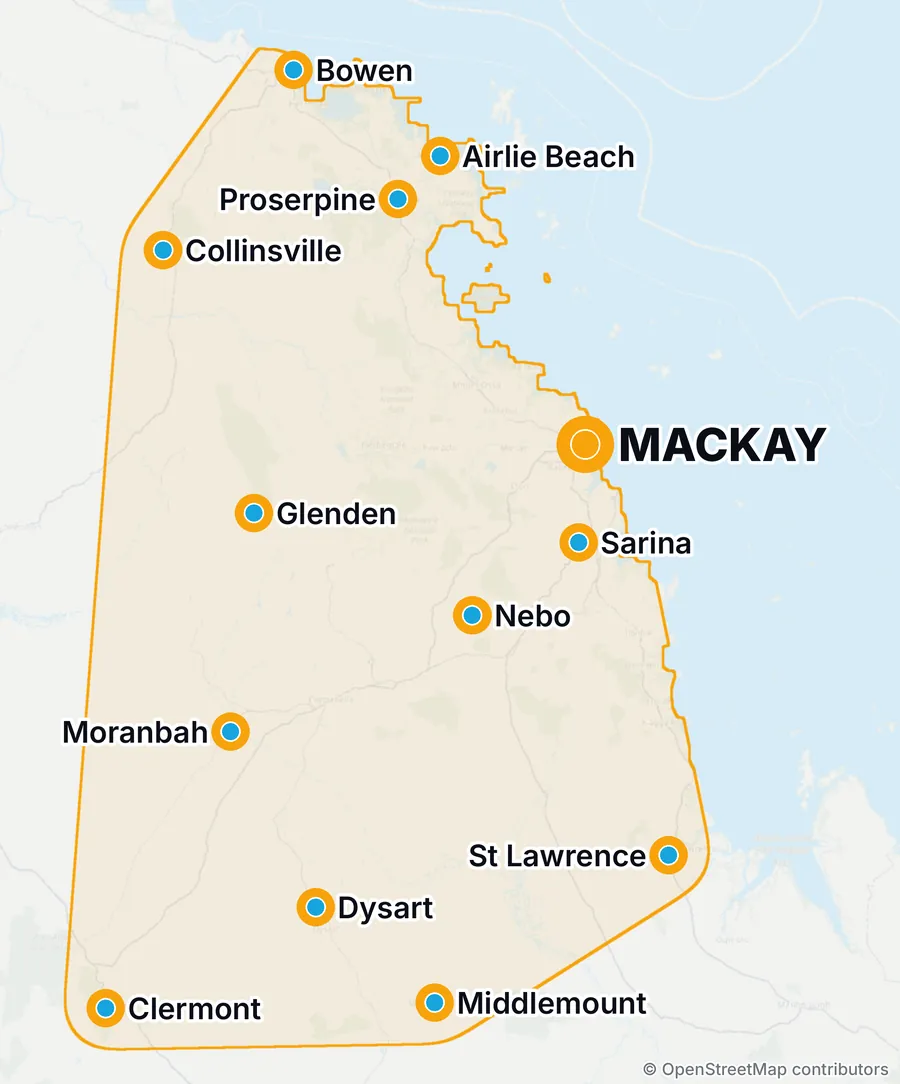
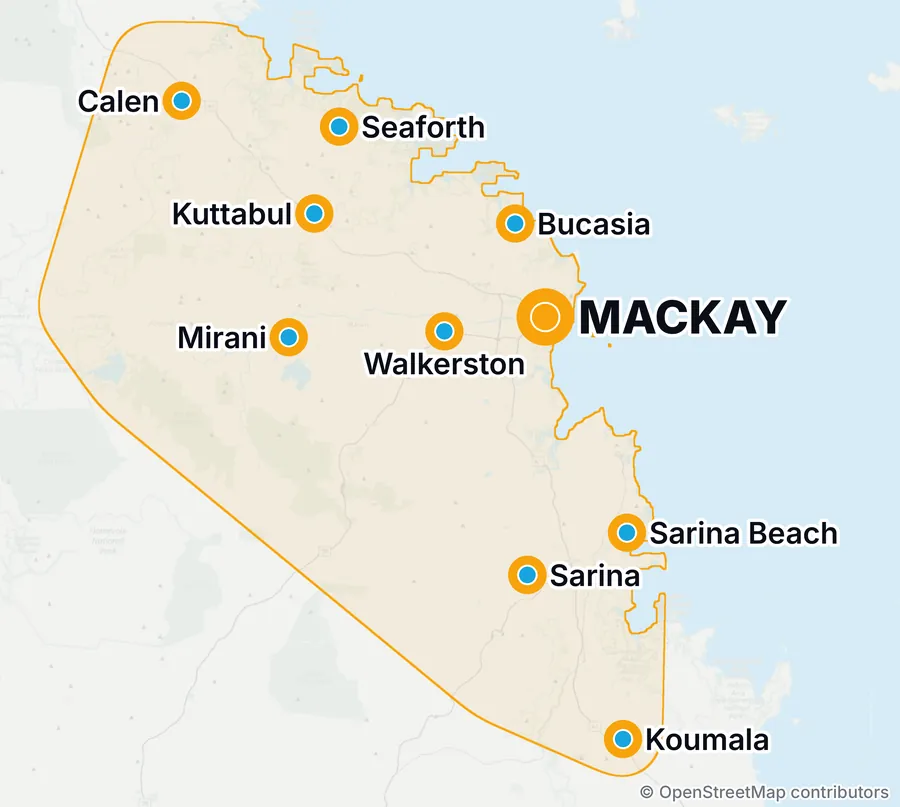
Next Phase Solar designs and installs battery systems across Mackay and the region, sized against your real Ergon bills, with the federal rebate applied upfront and the job signed off by a Queensland licensed electrician. See the home battery service for what is included.
Get a battery quote with the rebate already applied
Last reviewed June 2026.