
Last updated: October 2026 · Next Phase Solar team
Two houses can fit exactly the same bird mesh and get very different results. One is still clean after years. The other has brown marks or rust streaks down the roof. Usually the difference is not the installer. It is how much salt is in the air.
This guide explains how Australia rates corrosive conditions, what that means for bird mesh, and how to apply it in Queensland, from the reef coast to the inland mining towns.
If you haven’t read it yet, start with our guide to mesh materials and labels. This post assumes you know the difference between galvanised, 304 and 316.
What a corrosivity zone is
Salt spray from breaking waves carries inland on the wind and settles on everything, including the wire on your roof. Salt holds moisture against metal and speeds up rust.
The Australian Standard AS 4312 sorts places into corrosivity categories, from C1 (indoors) to CX (a severe surf shoreline). The Galvanizers Association of Australia (GAA) publishes a quick guide to these categories with examples, which is what the table below is based on.
The zones at a glance
| Zone | Where it applies | Examples from the GAA guide | Mesh we would recommend |
|---|---|---|---|
| CX Severe surf shoreline | On a surf beach shoreline, very high salt | Some Newcastle beaches | 316 stainless with PVC |
| C5 Surf seashore | Within about 200 m of rough seas and surf beaches. Wind can push it further inland | Parts of Newcastle beyond 500 m | 316 stainless with PVC |
| C4 Calm seashore | About 200 m to 1 km inland from surf. Also the shoreline to about 50 m inland on sheltered bays | Harbour foreshores | 316 preferred. 304 acceptable with regular washing |
| C3 Coastal | About 1 km to 10 km inland from surf coasts. Can reach 50 km | Metro Perth, Sydney, Brisbane, Gold Coast, Wollongong, Newcastle | 304 stainless with PVC. 316 if within about 5 km of the surf |
| C2 Inland | Most places at least 50 km from the coast. Also within about 1 km of quiet, sheltered seas | Canberra, Ballarat, Toowoomba, Alice Springs, and some suburbs of Brisbane, Melbourne and Hobart | 304 stainless, or galvanised with PVC on a budget |
| C1 | Indoors | Not relevant to roof mesh | Not relevant |
Watch out: These distances are guides, not survey lines. AS 4312 itself says local wind and terrain shift the zone. A house on a hill facing the sea breeze can sit in a harsher zone than its distance suggests. A sheltered valley can be milder.
- CXSevere surf shorelineOn the shoreline
- C5Surf seashoreWithin about 200 m
- C4Calm seashoreAbout 200 m to 1 km
- C3CoastalAbout 1 km to 10 km, can reach 50 km
- C2InlandAt least 50 km from the coast
Guide only. Wind and terrain move these lines.
The 5 km rule for stainless
The Australian Stainless Steel Development Association (ASSDA) gives one rule that is easy to apply: grade 316 or equivalent “should be selected as a minimum within five kilometres of the surf”.
ASSDA also says:
- 304 and 430 are “lower alloyed and less expensive grades” that “will probably become tea stained” in marine environments.
- The risk can extend to 20 km or more, depending on wind, shelter, pollution and temperature.
- It also applies within about 1 km of still marine waters.
So for bird mesh:
| How far you are from breaking surf | Grade to choose |
|---|---|
| Beachfront and the first rows back | 316 stainless |
| Within about 5 km | 316 stainless |
| More than 5 km, still on the coast | 304 stainless, or 316 if the site is exposed to sea wind |
| Inland, 50 km or more from the coast | 304 stainless, or galvanised with PVC on a budget |
What “tea staining” looks like
Tea staining is light brown discolouration on the surface of stainless steel. It is not the wire rusting through, and it doesn’t make the mesh weaker, but on a roof it looks like rust and it can spread to the roof sheets around it.
Lower grades show it first. That is the main reason to step up to 316 near the surf, even though 304 won’t rust through.
Tip: Fresh water rinses salt off. If you live near the sea, rinsing the mesh when your panels are washed helps keep tea staining away, especially with 304.
Queensland notes
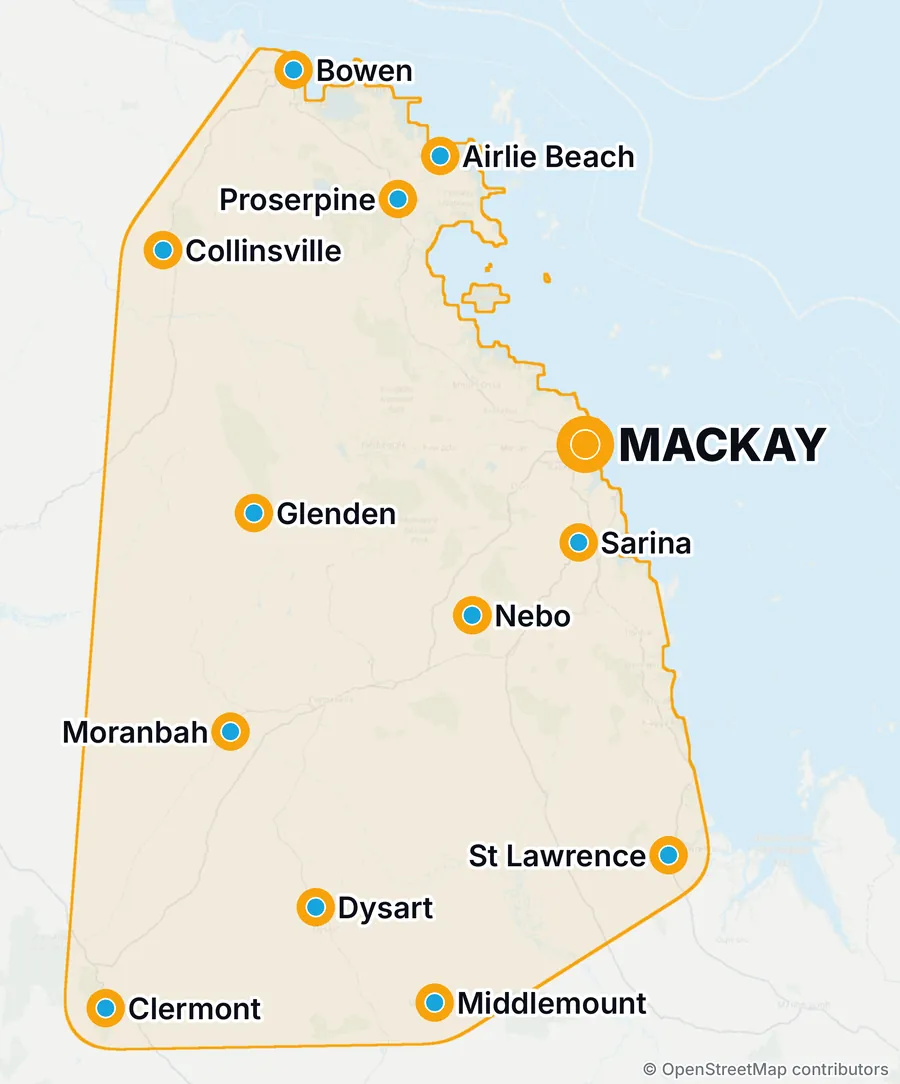
The reef coast: Mackay, Bowen, Airlie Beach, Townsville and Cairns
These are coastal towns on the Great Barrier Reef coast. Much of this coastline is sheltered by the reef, so it doesn’t get the heavy surf of the southern beaches. But suburbs near the beach still fall in the coastal range, roughly C3 to C4.
Our recommendation for these towns:
- 304 stainless as a minimum for coastal suburbs.
- 316 stainless for beachfront homes and the first rows back.
Watch out: Nobody should tell you the exact AS 4312 zone for your suburb without the AS 4312 maps or a local engineer’s assessment. We haven’t checked suburb by suburb, and we won’t pretend to. If your home is close to the water and you are not sure, choose 316.
Inland Queensland: Toowoomba, Emerald, Moranbah and Charters Towers
These are well away from the coast, in the C2 range. Toowoomba is one of the GAA’s own C2 examples.
Here 304 stainless is plenty. Galvanised mesh with a PVC coat is the budget option, and it suits inland conditions much better than the coast.
Sheltered bays and estuaries
Water that is calm, like a sheltered bay or a river mouth, carries less salt than surf. The GAA puts the shoreline of sheltered bays at C4 only up to about 50 m inland, and places within about 1 km of quiet sheltered seas can be as mild as C2. ASSDA still warns about the first kilometre from still marine waters, so if your home is right on the water, step up a grade.
Cyclone areas: check the fixings after storms
Much of the North Queensland coast is in cyclone wind regions under the wind loading standard AS/NZS 1170.2. We haven’t confirmed from a primary source which region applies to each town, so we won’t list them.
What matters for bird mesh is simple: strong winds pull at the mesh and the clips. After every big storm:
Stainless clips and UV rated or stainless ties hold up better than plastic over the years, which matters more in cyclone country.
Choosing your grade: a quick decision guide
- How far are you from breaking surf? Use a map and measure in a straight line.
- Within about 5 km? Choose 316.
- Further out but on the coast, or facing the sea breeze? 304 is the usual choice. If the site is exposed, choose 316.
- Inland, 50 km or more? 304, or galvanised with PVC if budget is the main concern.
- Not sure? Choose the higher grade. The extra cost of the right grade is small next to replacing rusted mesh and cleaning rust stains off a roof.
What we fit
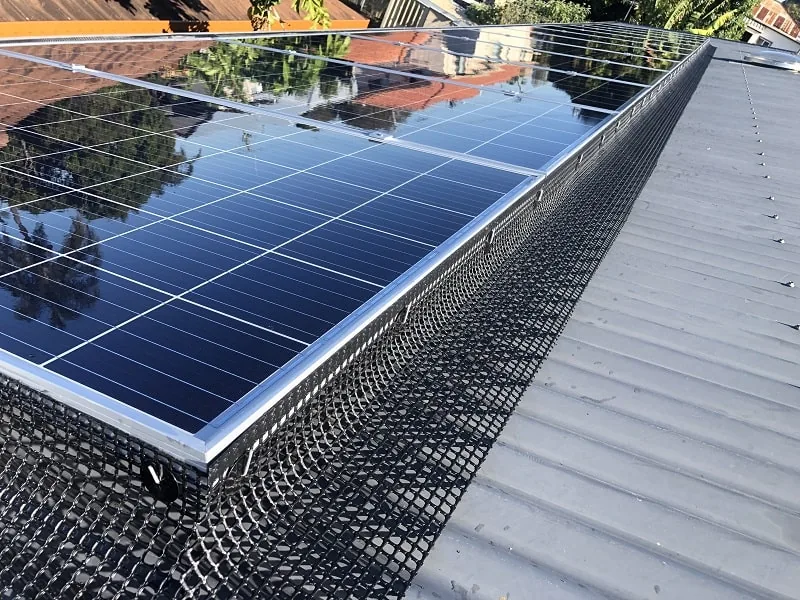
We fit 304 stainless steel mesh with a UV stable PVC coating, clipped to the panel frame, no drilling. Our installs come with a 3-year workmanship warranty, plus a 5-year warranty on the mesh. If your home is in the first rows back from the beach, talk to us about the right grade before you book.
Frequently asked questions
What is AS 4312?
It is the Australian Standard that sorts places into atmospheric corrosivity categories, from C1 indoors to CX on a surf shoreline. Builders and engineers use it to choose materials that will last.
How close to the sea do I need 316 stainless bird mesh?
ASSDA recommends grade 316 as a minimum within about 5 km of the surf. Beachfront homes and the first rows back should use 316.
Is Mackay a high corrosion area?
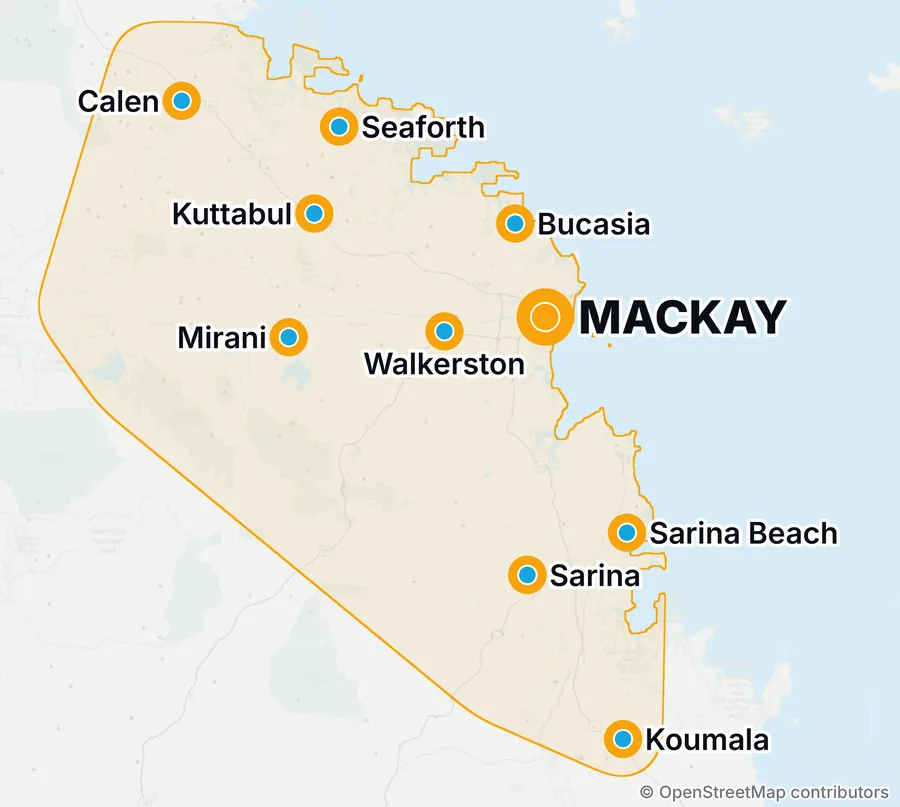
Coastal suburbs of Mackay fall roughly in the C3 to C4 range, and much of the coast is sheltered by the reef. The exact zone depends on how close you are to the water and how exposed the site is. Beachfront homes should choose 316.
Is galvanised mesh OK inland?
Inland, at least 50 km from the coast, galvanised mesh with a PVC coat is a reasonable budget option. 304 stainless still lasts longer.
What should I check after a cyclone or a big storm?
Look for mesh that has lifted away from the roof or frame, and missing or broken clips, especially at the corners. Fix gaps quickly before birds find them.
Read next
- Why bird proof your solar panels? A plain English guide
- Rust proof is not stainless: how to choose solar panel bird mesh
- Bird proofing solar panels: DIY kit or professional installation?
- How to install a solar panel bird mesh kit, step by step
- Salt on your panels too? A Solar Health Check cleans them and checks every panel with a thermal camera.