
People are not getting rid of solar. They are getting rid of a system they bought fifteen years ago that no longer does the job, and putting a bigger one in its place. Almost none of the removals we do are somebody giving up on solar. They are somebody whose 1.5 kW system from 2011 cannot run a house that now has ducted air conditioning, a pool pump and a car to charge.
That distinction matters, because the honest answer to “should I replace mine?” is different depending on which of five situations you are in. One of them means you should replace it now. One of them means you should wait until July 2028 and not touch a thing.
The five real reasons a system comes off a roof
The panels are simply old. Panels lose output slowly, and a good modern panel is warranted to still make around 85 to 90 percent of its rated output after 25 years. The problem with a 2011 or 2012 array is not just the years, it is that the panels sold in Australia during the first boom were a different class of product. Fourteen wet seasons in the tropics is a hard life for cheap laminate and cheap junction boxes.
The inverter is dead and it is out of warranty. This is the most common single trigger. Inverters carry roughly five to ten years of warranty, and they are the part that fails first. When a 2012 inverter dies, you are being asked to spend real money on a replacement inverter that will then be attached to fourteen year old panels. That is the moment most people stop and ask whether the whole thing should go.
The system is too small for the house it is on. A 1.5 kW system was the standard install during the Queensland Solar Bonus Scheme years. It makes about 6 kWh on a good day. That was a sensible size when the house had no air conditioning and the tariff paid 44 cents. It is not a sensible size for a Mackay house running air conditioning through a humid November to April.
The roof is being replaced. If the roof sheet is coming off, the array has to come off with it. If those panels are already twelve or fourteen years old, paying to remove and refit them is money spent on hardware that is near the end of its life anyway. This is the cleanest case for a straight replacement, because the removal cost is being spent either way.
Something is actually wrong. Water in a junction box, a burnt MC4 connector, a panel with visible delamination or a hot spot. These are safety issues rather than efficiency ones and they do not wait for a convenient time. A hot spot does not show from the ground: a Solar Health Check scans every panel with a thermal camera and the report says which cells are running hot.
The Mackay specific one: the 44 cent tariff, and the trap in it
A large number of Mackay houses still on their original small system are there for one reason. They are on the Queensland Solar Bonus Scheme, paid 44 cents per kilowatt hour for everything they export, and no modern system pays anything like that.
Two things about it are worth knowing before you touch the system.
It ends on 1 July 2028. That is not a proposal, it is the legislated end of the scheme. On that date everyone still on it moves to whatever their retailer pays, which in Queensland is currently somewhere between 3 and 12 cents.
You can lose it earlier by changing the system. Increasing your generating capacity beyond what was approved ends the 44 cent tariff immediately. There is a narrow exception for failed panels replaced under warranty, where the new array has to stay within 5 percent of the original capacity, but that is a like for like repair, not an upgrade.
So if you are on 44 cents and exporting a decent amount, the arithmetic usually says leave it alone and plan the replacement for 2028. If you are on 44 cents but the house now uses most of what it makes, you are exporting very little, the tariff is worth less than it looks, and the calculation changes completely. Work out what you actually export before you decide, not what you generate.
What happens to the rebate when you replace
This is where most of the bad advice lives, so here is what the Clean Energy Regulator actually says.
| What you do | STCs? |
|---|---|
| Replace some panels, keep the existing inverter | No |
| Add panels to the existing inverter | Extension, no new certificates for the old gear |
| Remove the original system entirely, new panels and new inverter | Yes, as a replacement system |
| Add a second inverter with its own new panels | Yes, as an additional system |
The rule behind it is simple once you see it: certificates are claimed once per piece of equipment. Panels and an inverter that already earned STCs in 2012 cannot earn them again. But a genuine replacement, where the old system comes off the roof and a complete new system goes on, is treated as a new install and earns certificates on the new capacity.
That is a real difference in price. It is also the reason a half measure, new panels onto the old inverter, is usually the worst value option on the table: you pay for hardware and you get no certificates against it.
When replacing is the wrong call
We would rather say this now than after a site visit.
- You are on 44 cents and exporting most of what you make. Wait for 2028 unless something has failed.
- Only the inverter has failed and the panels are recent. If the array is from 2019 rather than 2012, replace the inverter and keep the panels. Fewer than ten years and a modern panel has plenty of life left.
- The roof needs work first. Sequence matters. Nobody should install a new array onto sheeting that is due for replacement in three years.
- The system already covers the bill. If you are not importing much and the system is healthy, there is nothing to fix. If what you are short of is power after dark, that is a battery conversation, not a replacement.
What a replacement actually involves
The old array and inverter come down and go for recycling. The mounting rail is usually replaced too, because fourteen year old rail in a cyclone region is not something to reuse. New panels, new inverter, new isolators, and in a lot of these jobs a switchboard upgrade, because a 2012 board frequently will not take the new circuit without one.
The Ergon paperwork is a fresh connection application, not an amendment, since the capacity is changing. That is on us, not on you, but it does mean the timeline is the same as a new install rather than a repair.
Frequently asked questions
Are old solar panels worth anything? Not as second hand hardware, no. Anyone offering to buy a fourteen year old array is generally offering to take the removal cost off your hands rather than paying for panels. They go for recycling.
Can I just add panels to my existing system? Sometimes. It depends on whether your inverter has headroom, since panels can be up to 133 percent of inverter capacity. If your inverter is already at its limit, or it is old enough that you would not trust it with another decade, adding is not the cheaper option it looks like.
How long do solar panels actually last? A good modern panel is warranted to hold around 85 to 90 percent of output at 25 years. What tends to fail before the panel does is everything around it: the inverter, the connectors, the isolators, and in this climate the sealing on anything that was cheap to begin with.
Will replacing my system affect my feed-in tariff? If you are on a standard retailer tariff, no. If you are on the Queensland 44 cent Solar Bonus Scheme, increasing capacity ends it immediately, and it ends for everyone on 1 July 2028 regardless.
Sources
- Clean Energy Regulator, small-scale renewable energy systems
- Queensland Government, Solar Bonus Scheme 44c feed-in tariff
What to do next
If your system is from before 2013, the useful first step is not a quote, it is knowing two numbers: what you generate and what you actually export. Your bill has both. If you are exporting very little, the 44 cent tariff is not protecting as much as you think and the replacement case is probably already there.
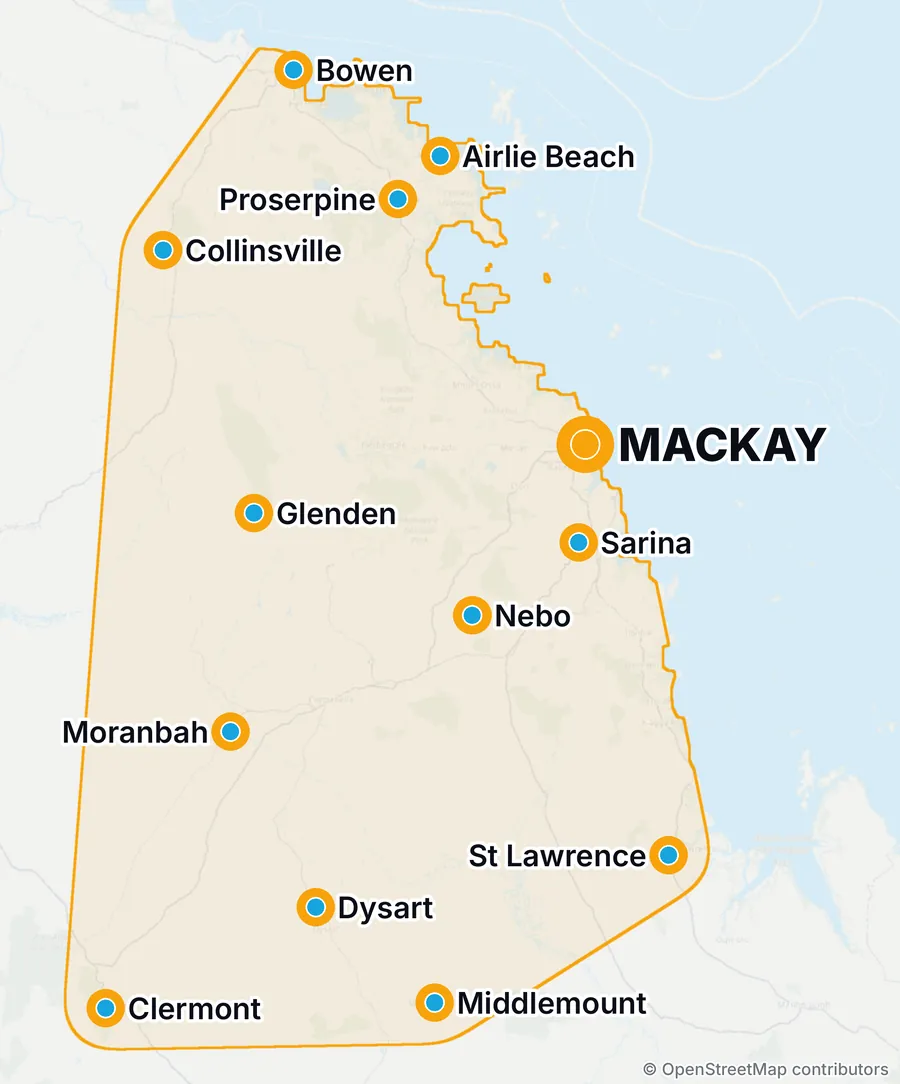
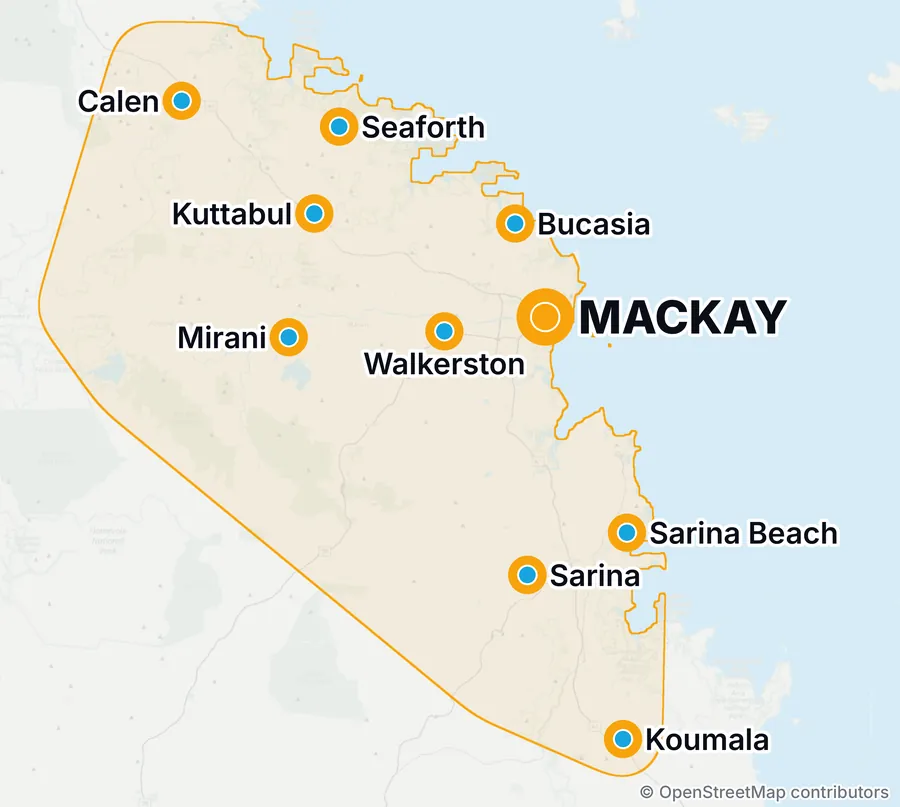
We replace complete systems across Mackay, the Whitsundays and the Bowen Basin, and we will tell you when the answer is to wait.